Hi all,
I think we’ve all seen a lot of news surrounding the Ukraine invasion this week. Today I’d like to highlight the role of big tech, as well as feature an excellent military analysis of the situation (highly recommended).
I’ll also talk about vertical integration and how companies that seemed “too integrated” before are now using it to their benefit.
📃This week’s mashup:
⭐Highlight: the future of online advertisement
🔍Valuation: vertical integration may offer value again
🌍Geopolitics: an in-depth analysis of the Ukraine invasion
✍🏻Blog: Excel performance Episode 1 - VLOOKUP vs. INDEX MATCH
⏭️Next
Have a great week!
⭐Highlight: War on Ads
A few weeks ago, I talked about the impact of Apple’s privacy updates on Facebook’s business model. Now, Google has announced it will do something similar on Android.
I wonder what will happen. Unlike Apple, Google actually sells ads. If it blocks third parties from tracking users across apps and across platforms, then it will have created a monopoly on targeted ads. Using its dominant position on the web (as a search engine, and with Chrome the dominant browser), and on mobile (and the mobile web, circumventing Apple’s efforts), it will be able to offer a very valuable platform for advertisers.
That begs the question: is Google really following Apple’s “privacy focus” for privacy reasons, or to solidify its position on the advertising market? I’d go with the latter.
Advertising has also been widely used to spread misinformation, or colloquially “fake news”. We now see big tech pull all its advertising business from the Russian market.

How You Can Limit Ad Tracking on Android and Chrome—Years Before Google Does - WSJ
Proposed privacy features for Google’s mobile OS and browser aren’t due for a year or more. Here’s what’s taking so long, and what you can do in the meantime.

Facebook pulls all ads in Russia and blocks all Russian advertisers globally
Facebook took another step against Russia amid its invasion of Ukraine after the country blocked access to its platform.

Google suspends all advertising in Russia
Google took the decision after Russia’s internet watchdog reportedly demanded that it stop showing what it perceived to be false ads about the Ukraine war.
🔍Valuation: Vertical Value
Economic theory tells me that vertical integration is a trade-off. Allowing one firm to specialize in one part of the supply chain brings economies of scale. For example, the production of coffee cups is much cheaper when separated from your corner coffee shop (even Starbucks doesn’t produce its own cups).
However, these separate firms require their own margins and could lead to more cumbersome logistics. But perhaps most important of all: you are no longer in control.
Because of the pandemic, and now the invasion of Ukraine, supply chains are severely disrupted. This shifts the balance in favor of more integrated firms. Here are two articles about the phenomenon that I found interesting.
Vertical integration: industries are stacking up in the face of supply chain disruptions
Vertical integration: industries are stacking up in the face of supply chain disruptions Retailers, crypto and financial services look to secure more of the value chain and aid procurement American Eagle Outfitters last year snapped up Quiet Logistics and delivery start-up AirTerra.
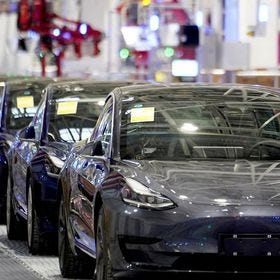
Explainer: How Tesla weathered global supply chain issues that knocked rivals | Reuters
Tesla Inc’s ability to design components in-house gave the automaker agility in making tweaks to parts and coping with supply chain issues that hit other automakers much harder, sources and experts said.
🌍Geopolitics: Invasion Analysis
For those of you interested in military strategy or if you want to see a very detailed map of the conflict unfolding in Ukraine, Critical Threats has great ongoing coverage. Their analysis is truly impressive.

Russian Offensive Campaign Assessment, March 6 | Critical Threats
The military situation on the ground has not changed significantly in the past 24 hours. Russian forces continue to mass for renewed offe…
✍🏻Blog: VLOOKUP vs. INDEX MATCH
If you’ve ever worked with Excel, you’ve probably asked yourself: can it go faster? In this article I look at how VLOOKUP and INDEX MATCH, two classic lookup functions, compare in terms of performance in 2022. Check it out!
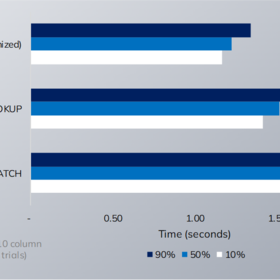
VLOOKUP vs INDEX MATCH in 2022 — It’s not that bad!
So you find yourself using a spreadsheet with a million VLOOKUP functions and you wonder: can it go faster?
⏭️Next
I plan on continuing my Excel performance articles, showcasing what to do when you encounter a slow sheet. I also plan to cover the basic formulas and how to use them efficiently soon, but more on that later so stay tuned.
I hope you enjoyed today’s issue. Feel free to email me at [email protected] with your tips and feedback.
Have a great week!